Why Zivolife customers keep mentioning their hair
And what the nutritional science says about why that makes sense
For most Zivolife customers, the hair changes weren't what they came for. They came for gut health, for energy, for a cleaner alternative to the greens powders that had disappointed them before. And then, somewhere around the four to six week mark, they noticed something they weren't expecting.
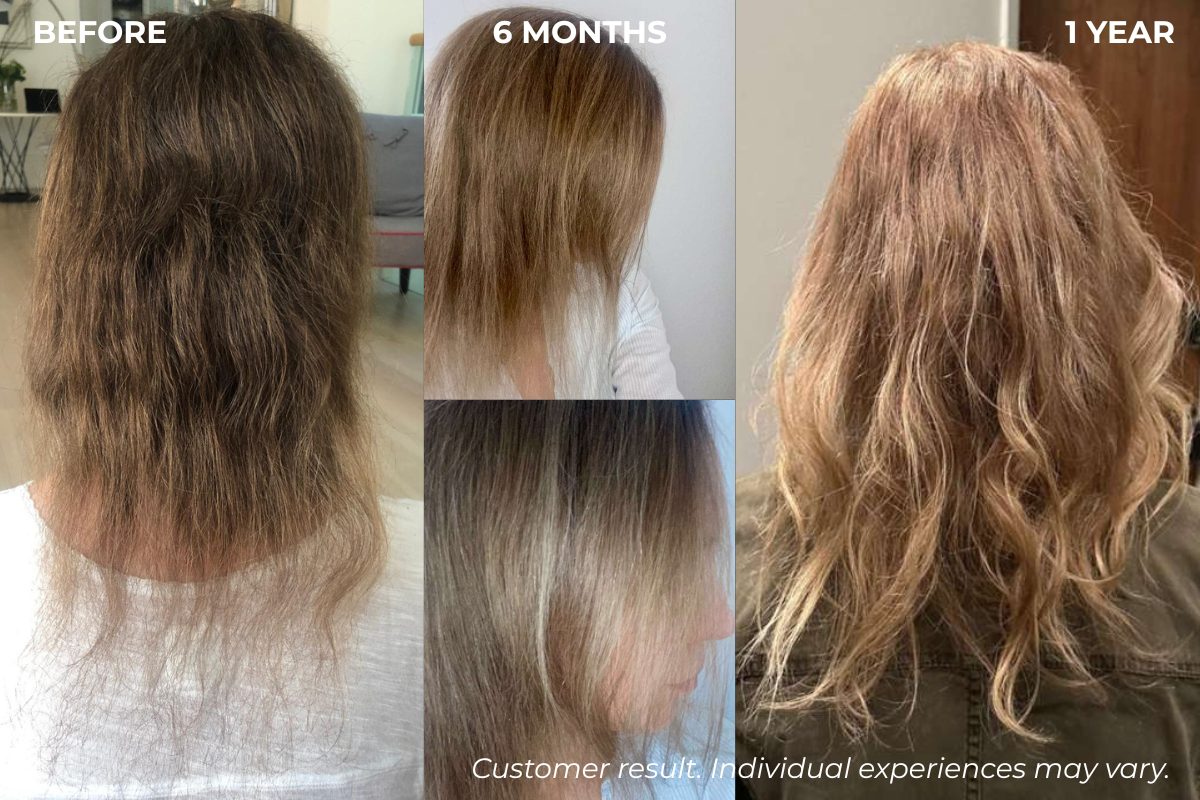
The reviews say it plainly. Thicker texture. Less shedding in the shower. Regrowth in places that had been thinning. Shine that wasn't there before. It comes up often enough, and specifically enough, that it's worth examining seriously rather than dismissing as coincidence.
This article is that examination: an honest look at why the nutritional and biological mechanisms behind Zivolife are exactly the kind of foundational inputs that hair health depends on, and why so many people are noticing the same thing.
Hair loss is usually a downstream symptom
The hair and beauty industry has built a significant business around treating hair concerns at the surface: topical treatments, specialized shampoos, targeted serums. Some of these have merit. Most of them share a common limitation in that they address the output without asking what's driving it.
Hair shedding, thinning, and slow regrowth are rarely problems that originate at the scalp. They are typically symptoms of deficiencies at the source: in key nutrients, in the body's ability to absorb and deploy those nutrients, and in the systemic inflammatory and hormonal environment in which the hair growth cycle operates.
Fix the foundational inputs and the downstream symptoms often follow. This is the lens through which Zivolife's relationship with hair health makes the most sense.
The nutrient foundation hair requires
Hair is approximately 95% keratin, a structural protein built from amino acids. The body cannot synthesize keratin without an adequate and complete supply of amino acids, and it cannot prioritize hair construction when amino acid availability is limited, because hair is biologically considered non-essential tissue. When the body is working with insufficient protein intake or poor protein bioavailability, hair is among the first things to be deprioritized.
Zivolife contains approximately 52g of complete protein per 100g of dried biomass, covering all nine essential amino acids at greater than 90% bioavailability. That bioavailability figure matters. Spirulina's protein bioavailability typically runs 60 to 70%. The difference between a complete protein source the body can fully utilize and one it only partially can is meaningful for tissues like hair that sit at the end of the body's nutritional priority queue.
Iron is the other significant factor. Iron deficiency is one of the most extensively documented nutritional drivers of hair shedding, particularly the diffuse shedding pattern common in women, where hair becomes progressively thinner across the whole scalp over time rather than falling out in patches. Ferritin levels, the body's iron storage marker, are consistently low in women presenting with unexplained hair loss in clinical practice, even when full anemia isn't present. Zivolife contains iron at 142mg per 100g of dried biomass, making it a meaningful whole food source of this nutrient, particularly relevant for anyone whose levels are running suboptimal.
Vitamin E contributes to scalp microcirculation and protects follicle cells from oxidative damage. The B-vitamin complex in Zivolife, including riboflavin, pantothenic acid, and pyridoxine, supports follicle cell proliferation, red blood cell production for follicle oxygenation, and the metabolic pathways that keratin synthesis depends on.
The gut connection most hair conversations skip
Here's where the story gets more interesting, and where Zivolife's profile does something that isolated hair supplements cannot.
Consuming the right nutrients is only part of the equation. Delivering them effectively to the follicle requires a gut that is absorbing efficiently. A compromised gut barrier, characterized by increased intestinal permeability, disrupted tight junction proteins, and microbiome imbalance, reduces the bioavailability of exactly the micronutrients hair depends on most: iron, B-vitamins, and amino acids.
Zivolife's beta-glucan content feeds the bacterial populations responsible for gut barrier integrity and supports the tight junction proteins that regulate what crosses the intestinal wall into circulation. Pheophorbide a, a natural anti-inflammatory compound identified in Zivolife by researchers at the University of Mississippi (Qiu et al., 2020), addresses the low-grade inflammatory activity in gut tissue that underlies many cases of compromised absorption. Better gut integrity means more of what you eat, from Zivolife and from your wider diet, reaches the tissues that need it.
This is why the gut-hair connection is increasingly a focus in dermatological and nutritional research. The gut microbiome affects how the whole body accesses and deploys nutrients, including those that regulate hair growth cycling.
The hormonal and inflammatory environment
Hair growth operates in three cycles: anagen (active growth), catagen (transition), and telogen (resting and shedding). Disruptions to this cycle, particularly an extended telogen phase or a shortened anagen phase, produce the diffuse shedding and slow regrowth that people most commonly notice and find most distressing.
Two of the most significant drivers of cycle disruption are hormonal imbalance and chronic low-grade inflammatory activity, and both are areas where Zivolife's nutritional profile has mechanistic relevance.
On the hormonal side: gut microbiome composition influences how the body metabolizes and recycles estrogen through a process involving a collection of gut bacteria researchers have termed the estrobolome. When gut microbiome diversity is compromised, estrogen metabolism becomes less efficient, contributing to the hormonal fluctuations that are a primary driver of telogen effluvium, the shedding pattern most commonly experienced during and after periods of hormonal change. Supporting gut microbiome health through consistent prebiotic fiber intake is one of the more evidence-grounded dietary approaches to this mechanism, and Zivolife's beta-glucan and dietary fiber profile is directly relevant here.
On the inflammatory side: chronic low-grade systemic inflammatory activity is increasingly linked in the research literature to follicle miniaturization and disrupted hair growth cycling. The specific mechanisms involve inflammatory cytokines interfering with the signaling pathways that regulate the anagen phase. Pheophorbide a addresses this at the molecular level by supporting a healthy inflammatory response in the body. The biological pathway between systemic inflammatory load and hair cycle disruption is well-established and worth understanding for anyone experiencing unexplained shedding or slow regrowth.
What the research doesn't say, and what customers do
There are no published clinical trials specifically examining Zivolife and hair outcomes. What exists is a robust mechanistic argument: these nutrients and biological pathways are documented to matter for hair health, alongside a consistent pattern of customer-reported observations that align with that argument.
What customers describe is gradual rather than sudden. Changes in shedding and texture tend to be noticed from around four weeks in, with more significant observations around the two to three month mark. This is consistent with the biology of the hair growth cycle, where improvements take weeks to months to become visible at the scalp.
Several customers describe noticing the hair changes before they went looking for them, which is perhaps the most credible kind of report. They came for something else and found this.
A note on scope
Zivolife is a whole food. It addresses foundational nutritional and gut health inputs that the hair growth cycle depends on. For someone whose hair concerns are rooted in nutrient deficiency, compromised absorption, microbiome imbalance, or systemic inflammatory load, consistent daily use creates the biological conditions in which the body can redirect resources toward non-essential tissues like hair.
For hair concerns with other causes, including genetic predisposition, autoimmune conditions, or hormonal disorders requiring clinical intervention, nutritional support plays a complementary role. If you have concerns about significant hair loss, a conversation with a healthcare provider or dermatologist is the right starting point.
One serving of Zivolife is one teaspoon or one stick pack, 3g, once a day.
These statements have not been evaluated by the Food and Drug Administration. Zivolife is a whole food and is not intended to diagnose, treat, cure, or prevent any disease. If you have a specific health condition, are pregnant or nursing, or take prescription medications, consult your healthcare provider before adding any new food to your routine. Third-party testing by Eurofins Scientific is conducted on every commercial lot.