Zivolife and recovery: the upstream variable most protocols are missing
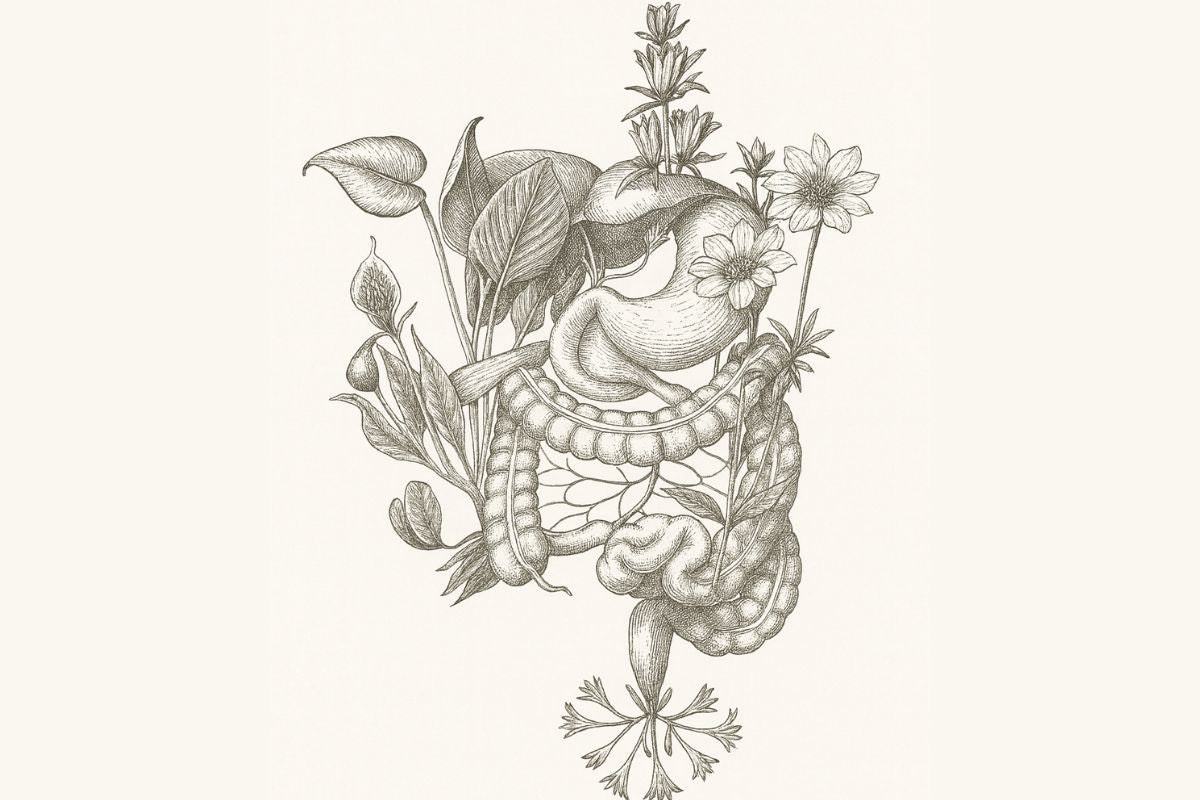
The gut takes a hit every time you train hard. Not metaphorically. Literally. Blood flow redirects away from the digestive tract during intense effort, and the window that follows, when you're reaching for protein and electrolytes, is exactly when absorption is most compromised. The intestinal wall becomes temporarily more permeable. Absorption efficiency drops. The immune signaling load the body has to manage post-effort increases. The harder the session, the more pronounced the effect. Stack enough of those sessions together and the compound impact on recovery becomes significant.
This is the variable most protocols never account for. Not because the science is obscure, but because the supplement industry has very little incentive to point at the gut and say: the reason your recovery nutrition isn't fully working is the condition it's landing in.
The human body was designed to handle physical demand and recover from it. That capacity is intact. What has changed is the nutritional environment the body is trying to do that work in. Processed foods, depleted soil profiles, chronic stress, training loads that bear little resemblance to the activity patterns human physiology evolved alongside. The gut barrier integrity, microbiome diversity, and inflammatory resolution capacity that recovery depends on are genuinely harder to maintain than they once were. The body is not broken. The inputs it was designed to run on are less available than they used to be.
Fixing that upstream condition changes the downstream outcome. And this is where Klebsormidium flaccidum, the organism in Zivolife, enters the picture in a way that no protein powder or recovery formula does.
What makes your protocol work better
Zivolife is a daily whole food. One organism, nothing added, third-party tested by Eurofins on every commercial lot. At a 3g serving size it sits upstream of the macronutrient conversation entirely. What it carries is the bioactive compound profile that supports the conditions recovery runs on.
Beta-glucans at more than three times the concentration found in spirulina. These are among the most rigorously researched compounds for gut barrier support and immune modulation under physical stress, feeding the bacterial populations that maintain intestinal wall integrity and supporting the tight junction proteins that govern what crosses into circulation and what doesn't. For anyone training at volume, a well-functioning gut barrier is the condition that determines how well everything else performs.
Polyphenols, verified by Eurofins across every commercial lot, at a concentration among the highest documented in any commercially available microalgae. Polyphenols quench the reactive oxygen species that intense exertion generates in gut tissue. They support microbiome diversity. They protect the intestinal environment during the recovery window when it's most under stress. No mainstream recovery formula carries polyphenols at this density. Most carry none.
Inflammation, adaptation, and what the research shows
The inflammatory response to training drives adaptation. Blunt suppression of it, which is what high-dose NSAIDs do chronically, impairs the very process that makes training productive.
What matters is how efficiently the body moves through that response, returns to baseline, and absorbs the next training stimulus without carrying the residue of the last one. When that process runs slowly, recovery stalls. Training load accumulates faster than adaptation. The body starts working against itself.
A published randomized controlled trial using a ProAlgaZyme preparation, the clinical lineage from which Klebsormidium flaccidum var. ZL01 is derived, documented a 55% reduction in CRP and IL-6 over 10 weeks in human subjects (Oben et al., Lipids in Health and Disease, 2007). Two of the most tracked markers of systemic inflammatory status. Peer-reviewed, double-blind, placebo-controlled.
Separately, researchers at the National Center for Natural Products Research identified pheophorbide a as the primary anti-inflammatory compound in the ZL01 biomass, with iNOS inhibition at an IC50 of 0.24µM (Qiu et al., Molecules, 2020). An unusual level of potency for a food compound, pointing to a specific biological pathway relevant to how efficiently the body manages its inflammatory response under physical load.
What the science suggests is support for the body's capacity to move through its inflammatory response to training efficiently. For anyone whose recovery window matters because the next session is already scheduled, that is the whole point.
Restoring what the body was always designed to run on
The gut barrier integrity and capacity to manage the inflammatory response that recovery depends on were never supposed to require active maintenance. In a different nutritional environment, they largely took care of themselves. That environment has changed, and the downstream effect shows up most clearly in people asking the most of their bodies, training hard, recovering inadequately, and assuming the answer is a better product rather than better upstream conditions.
Zivolife is Klebsormidium flaccidum var. ZL01, an organism that evolved over 500 million years under conditions of intense environmental stress, carrying a bioactive compound profile that speaks directly to what those upstream conditions need. The beta-glucans, the polyphenols, the pheophorbide a are not formulated additions. They are what this organism is. Taken daily as a whole food, that profile restores the inputs the body's own recovery mechanisms were always designed to run on. Your protocol may well be doing its job. This is what determines whether that job is getting done.
One teaspoon. Every day.
Not post-workout. Not periodized around training blocks. Every day, because the upstream conditions that determine recovery quality are built or eroded daily, not session by session.
The people who report the most consistent outcomes with Zivolife are the ones who stopped treating nutrition as a series of acute interventions and started treating it as a daily whole food practice.
Taken every day, Zivolife gives the body's own recovery mechanisms what they need to do their job.
Zivolife is a whole food, not a medicine. This article is for informational purposes only and is not a substitute for professional medical advice. If you have specific health concerns or are managing a medical condition, consult your healthcare provider before making changes to your nutrition.