Article: Heavy metals, the gut, and why Klebsormidium flaccidum is the most interesting organism in this conversation
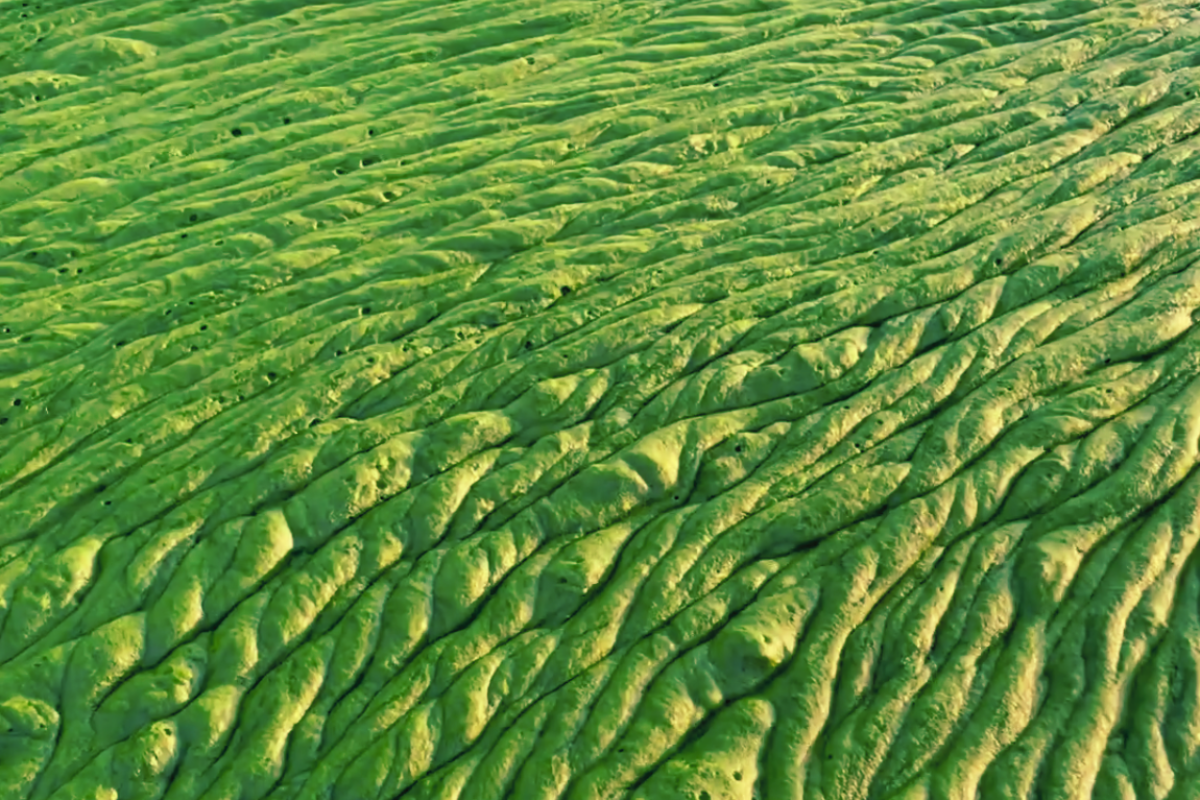
Heavy metals, the gut, and why Klebsormidium flaccidum is the most interesting organism in this conversation
Chlorella has held the microalgae detox conversation largely to itself for years. That's not entirely undeserved—its cell wall binds heavy metals, the research is real, and for a lot of people it's been a reasonable daily choice. But chlorella is a relatively simple organism doing a relatively simple job. And the more you understand about what heavy metal defense in the gut actually requires, the more you realize the conversation has been missing something.
That something is Klebsormidium flaccidum.
Zivolife exists because this organism is genuinely extraordinary. Not in the way that word gets thrown around in nutrition marketing, but in the specific, documented, peer-reviewed sense that it carries a compound profile that very few commercially available microalgae can approach. The heavy metal question is one place where that difference becomes impossible to ignore.
What actually happens in the gut
Most ingested heavy metals, lead, mercury, cadmium, the ones that accumulate quietly over a lifetime through food, water, and environmental contact, enter the body through the gut. The intestinal wall is the crossing point. Which means the gut lumen is also the most accessible place to stop them.
The mechanism that makes microalgae useful here is structural. Cell walls present negatively charged sites that attract and hold positively charged metal ions. The complex that forms is insoluble under gut conditions. The metal stays bound to the algal biomass as it travels through the intestines and exits the body. It doesn't cross. It doesn't enter circulation.
Chlorella does this reasonably well. But effective heavy metal defense in the gut actually requires three things working together: the binding capacity to capture metals, the structural stability to keep them bound through the full length of the digestive tract, and the bioactive compounds to protect the gut lining from the oxidative stress that metal exposure generates along the way.
Chlorella handles the first. It struggles with the third. And its rigid, often mechanically-cracked cell wall raises real questions about the second.
Klebsormidium flaccidum, the organism in every stick of Zivolife, is built for all three. That's not a marketing position. It's what the nutrient profile shows.
An organism built for chemical stress
Klebsormidium flaccidum is not a typical microalgae. It belongs to the Charophyte class, the evolutionary bridge between aquatic algae and every land plant that has ever existed on earth. More than 500 million years ago, organisms in this lineage made the transition from water to land, and surviving that transition meant evolving chemistry for problems aquatic algae never had to solve.
Oxidative stress. UV radiation. Desiccation. Mineral stress from variable soil and water environments. The compounds that emerged from those evolutionary pressures, secondary metabolites, stress-response chemistry, a cell architecture unlike anything in spirulina or chlorella, are documented in the published genome of Klebsormidium flaccidum (Hori et al., Nature Communications, 2014). The science isn't new. What's new is that this organism is now available as a daily whole food, in Zivolife, as a single-strain patented culture third-party tested by Eurofins on every commercial lot.
What the profile actually shows
Polyphenols at 603mg per 100g. This alone sets Zivolife apart from every mainstream microalgae. Polyphenols are established chelating agents. Their molecular structure forms stable complexes with metal ions directly. They are also potent antioxidants, which matters because heavy metal exposure generates reactive oxygen species in gut tissue. Oxidative damage to the intestinal wall is how low-level chronic metal exposure compounds over time. Chlorella doesn't carry polyphenols at this concentration, and neither does spirulina.
Beta-glucans at greater than 3% of biomass, more than three times the concentration found in spirulina. Beta-glucans support gut barrier integrity and a balanced microbiome. A robust intestinal wall isn't just a general wellness outcome. It determines how effectively the gut resists metal absorption in the first place, and how well it recovers from the oxidative stress that metal transit creates.
Hydroxylated fatty acids, not typically found in spirulina or chlorella, reinforce cellular membrane stability under chemical stress. A complete amino acid profile at greater than 90% bioavailability. Iron at 142mg per 100g. These aren't incidental. They reflect the biochemistry of an organism that evolved specifically to survive environmental stress. In Zivolife, that translates to something chlorella simply cannot offer.
The porphyrin detail worth knowing
Here's something the chemistry literature has understood for a long time, even if it rarely makes it into consumer health writing.
Porphyrins are ring-shaped organic molecules with a remarkable natural affinity for coordinating metal ions. Chlorophyll is a magnesium-porphyrin. Hemoglobin is an iron-porphyrin. The porphyrin ring is one of the most efficient metal-binding architectures in nature. When the central metal atom is removed, producing what chemists call a free-base porphyrin, that coordination site opens up again, with a particular readiness to bind heavy metal ions.
Pheophorbide a is a demetallated porphyrin, derived from chlorophyll. It was identified and quantified in Zivolife's biomass by researchers at the National Center for Natural Products Research, published in Molecules (Qiu et al., 2020). Its anti-inflammatory activity is well documented: iNOS inhibition with a measured IC50 of 0.24µM, a level of potency that is frankly unusual for a food compound. What the porphyrin chemistry literature establishes separately is the metal-coordination behavior of this compound class.
Two bodies of science. One organism.
Why this matters for how you think about your daily routine
Zivolife is a daily whole food. It is also, by virtue of what Klebsormidium flaccidum actually is, one of the most compound-rich organisms available for anyone thinking seriously about what they put in their body every day, and what they want it to do.
The microalgae most people reach for when they're thinking about heavy metal support was selected decades ago, before the science of the gut barrier, polyphenol chelation, and porphyrin chemistry had developed the way it has. Chlorella earned its reputation on what was known then. What's known now points in a different direction.
Zivolife is Klebsormidium flaccidum var. ZL01, one of the most nutritionally complete whole food microalgae available. In the context of heavy metal defense, as in every other context where the science of this organism has been examined seriously, the compound profile tells a story that chlorella simply can't match.
Zivolife is a whole food, not a medicine. This article is for informational purposes only and is not a substitute for professional medical advice. If you have concerns about heavy metal exposure or are managing a specific health condition, consult your healthcare provider.